 projects.py
×
James Nithil V
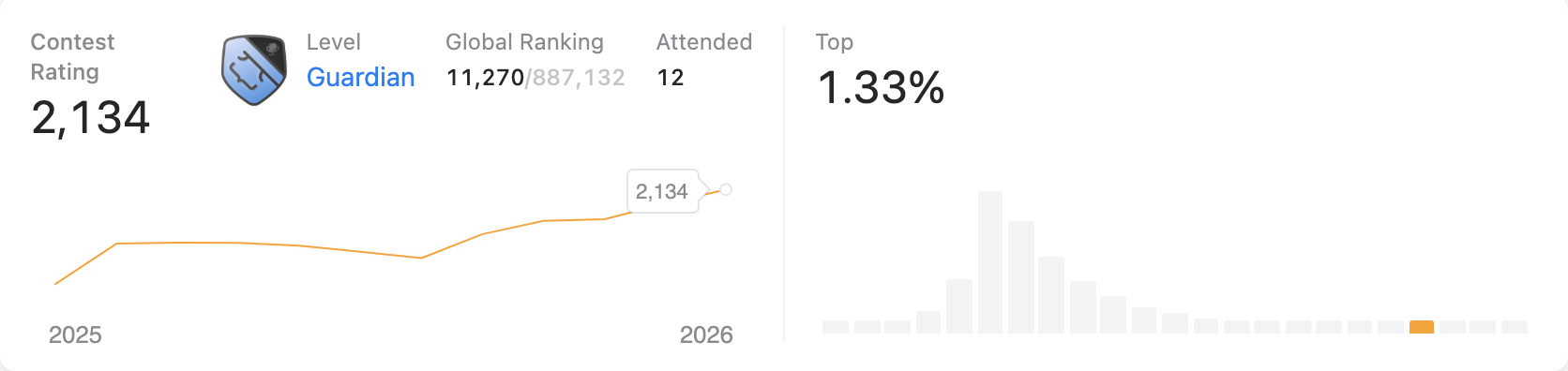
Junior Software Developer LeetCode Guardian (Rating 2,134)
Software Developer at Vaken Technologies Pvt Ltd, building scalable backend services and REST APIs for Sovablu using Java, Spring Boot, Redis, PostgreSQL, Jenkins CI/CD, and Claude SDK. Simultaneously, architecting KadalVazhi to handle more users. The architecture uses REST APIs, GraphQL, and gRPC for microservices communication. AI tasks are optimized via Claude SDK model switching for cost efficiency. The system is built with Java, Python, Kafka, and a dual database strategy of PostgreSQL and DynamoDB, ensuring efficient scaling.
KadalVazhi (கடல் வழி): Maritime Operations & AI Platform
Jan 2026 to Present · ActiveMaritime operations and direct catch marketplace for deep sea fishing fleets
Deep sea mechanized fishing in South India is a high risk, capital intensive industry where boat captains spend 7 to 15 days offshore with zero cellular network. KadalVazhi is built to modernize maritime operations by eliminating manual paper accounting, bypassing exploitative dockside middlemen through direct catch preorders, providing real time sea weather intelligence, and automating emergency crew and marine mechanic dispatch for coastal fishing communities.
Fishermen currently track trip expenses, diesel consumption, ice costs, food provisions, and daily catch weights on loose paper sheets or pocket diaries. Over multi week voyages, receipts get damaged by seawater or lost, leaving boat owners unable to calculate actual net profit, monitor fuel efficiency, or maintain clear accounts.
After battling rough seas for 7 to 15 days catching premium, high demand species like Yellowfin Tuna (சூரை) and Kingfish or Seer Fish (வஞ்சிரம் / Neymeen), fishermen are forced into distress sales. Because captains have no direct access to buyers before docking, harbour commission agents exploit perishable catches by imposing low auction rates, taking up to 25% of the total value.
Traditional crews rely on morning television news or informal radio chatter from passing boats. Mid sea squalls, high waves, and sudden current changes occur rapidly, leaving deep sea trawlers exposed without immediate, localized weather and current alerts.
Deep sea mechanized trawlers require a full crew of 6 to 12 experienced deckhands to operate safely and haul heavy nets. When 2 or 3 crew members face sudden family or medical emergencies, the boat cannot sail. Captains lose days making frantic phone calls searching for certified deep sea labourers, wasting perishable ice, rations, and scheduled voyage dates.
When an inboard marine engine fails, finding a qualified diesel mechanic is difficult. This becomes acute during the annual 61 day monsoon trawling ban in Kerala and Tamil Nadu (June and July), when hundreds of trawlers queue up simultaneously at harbours for engine overhauls, stranding vessels for weeks.
Building a new mechanized deep sea trawler costs over 1.5 Crore rupees ($180,000+). Ambitious fishermen looking to grow their business must buy pre owned vessels, but currently rely on informal broker circles that charge heavy hidden commissions and conceal engine defects and maintenance history.
Fishermen have no intelligent advisory system to guide them on seasonal fish movements, weather navigation, and business decisions. Existing applications only offer English text interfaces, whereas boat captains need hands free voice guidance in native Tamil and Malayalam coastal dialects.
Engineered to support 120,000+ active fishermen, boat captains, harbour buyers, and marine mechanics across coastal Tamil Nadu (Kasimedu, Nagapattinam, Rameswaram, Colachel) and Kerala (Kochi, Munambam, Neendakara, Vizhinjam). Concurrency peaks during early morning dockside auction hours (3:00 AM to 7:00 AM).
Balanced Hybrid Workload: Write heavy offshore as boat GPS telemetry, engine fuel consumption, and catch declarations are continuously logged to local SQLite queues; Read heavy at dockside as thousands of seafood wholesalers and buyers query live catch listings, market price trends, and mechanic availability.
AP (Availability + Partition Tolerance) at Sea: Marine clients run offline first with embedded SQLite, ensuring uninterrupted logging during total cellular blackouts, syncing with idempotent deduplication upon reaching coastal 4G. CP (Consistency + Partition Tolerance) at Harbour: Dockside catch preorders and financial transactions enforce strict relational ACID consistency in PostgreSQL.
Edge API gateway response under 50ms via Spring Cloud Gateway. Asynchronous Kafka event ingestion under 15ms. Emergency mechanic and crew SOS notifications dispatched in under 4 seconds via automated SMS and IVR voice broadcasts. Offline queue reconciliation completed in under 2.5 seconds.
45% reduction in LLM inference costs achieved by routing routine voice requests (weather, harbour timings) to lightweight local models, invoking deep reasoning models only for multi step trip advisory. 70% database load reduction via Redis Cluster caching for market prices and harbour leaderboards.
Backend Services: Java 25 and Spring Boot with Virtual Threads.
Event Streaming: Apache Kafka partitioned by Harbour ID.
AI and Voice Engine: Python FastAPI, Whisper Voice Engine, and Gemini.
Persistence: PostgreSQL, Redis Cluster, pgvector, and S3 Storage.
@Component
public class CatchEventConsumer {
@KafkaListener(topics = "catch_reported_events", groupId = "marketplace_v1")
public void processOffshoreCatch(CatchDeclaredEvent event) {
// Idempotent catch registration synced from offline marine client
marketplaceService.registerDocksidePreOrder(event.getVesselId(), event.getSpecies(), event.getEtaHarbor());
redisLeaderboard.updatePortVolume(event.getPortId(), event.getWeightKg());
}
}
Sub 15ms message ingestion across Kafka partitions during peak morning harbour docking hours.
Mobile SQLite WAL mode local transaction queue with idempotent UUID deduplication across 20+ NM dead zones.
Bypassed commission middlemen on premium Tuna and Seer fish through advance dockside preorders.
Automated crew exchange board and geolocated mechanic dispatch cut harbour idle time from 48 hours to under 3 hours.
Transparent pre owned trawler marketplace with verified engine inspection logs protects buyers from broker fraud.
Dynamic query router delegates routine queries to lightweight local models and deep reasoning to flagship LLMs.
Offshore Vessel
Coastal 4G Relay
Kafka Event Stream
Cloud Microservices
TicketFlow: Engineering Task and Workspace Issue Tracker
October 2026Personal ticket tracking and agile workspace portal with GraphQL queries, Kanban boards, and sprint velocity tracking
Built a personal issue tracking and task management portal to organize engineering work across different workspaces. It connects Next.js frontend components to a Supabase PostgreSQL database using GraphQL queries and mutations, giving developers a fast way to triage issues, update task progress on Kanban boards, and log daily standup notes.
- Workspace Separation: Organizes engineering tasks into dedicated workspaces such as TicketFlow and KadalVazhi so each project keeps its own independent ticket lists.
- GraphQL Data Fetching: Uses GraphQL queries and mutations to load tickets quickly, update issue statuses without page refreshes, and keep payload sizes minimal.
- Live Ticket Filtering: Filters tasks instantly across status stages like To Do, In Progress, Completed, and Blocked, along with priority levels and functional categories such as Bug, Feature, Database, and Design.
- Kanban Boards and Velocity Metrics: Provides a visual board to move tickets across columns, track overall completion percentages, and write daily standup notes in one place.
 github/TicketPortal
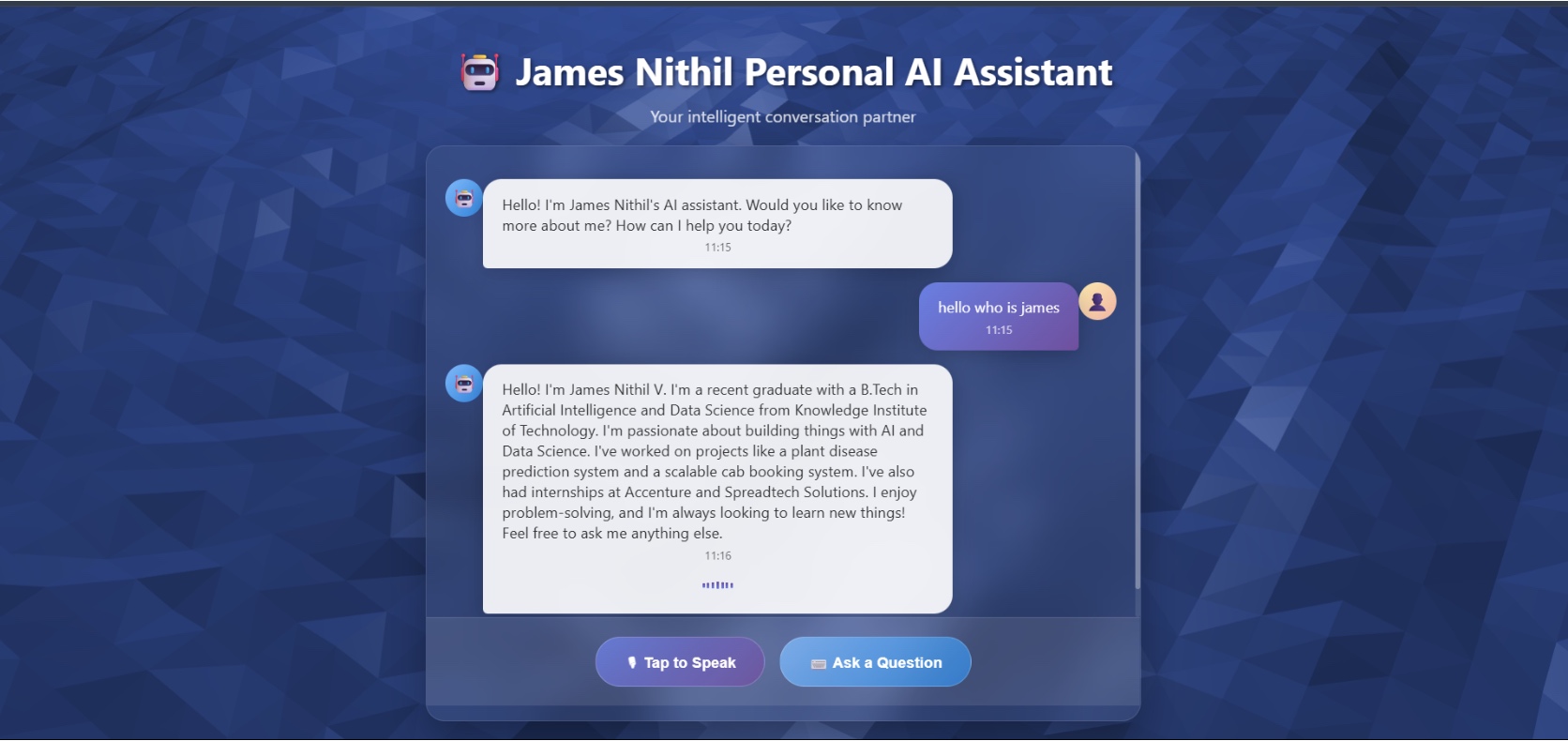
James AI VoiceBot: Personal Interview Assistant
Jun 27, 2025Interactive conversational voice assistant built for interviewers to explore candidate background without manual resume review
Developed an interactive voice assistant that allows recruiters and technical interviewers to ask questions verbally or via text instead of reading a traditional static resume. The system dynamically answers queries about James, including academic background at Knowledge Institute of Technology, technical proficiencies in Java and Python, core projects, internship track record, and contact details in real time.
- Real Time Speech Recognition: Built an audio capture and voice recognition flow using Web Speech API and Python Flask to transcribe spoken interview questions instantly.
- Conversational Knowledge Retrieval: Integrated Google Gemini API with tailored candidate context prompt engineering to articulate accurate responses about engineering skills and past experience.
- Vocal Feedback Synthesis: Integrated ElevenLabs Voice API and gTTS for natural sounding audio responses, enabling smooth voice communication between recruiter and assistant.
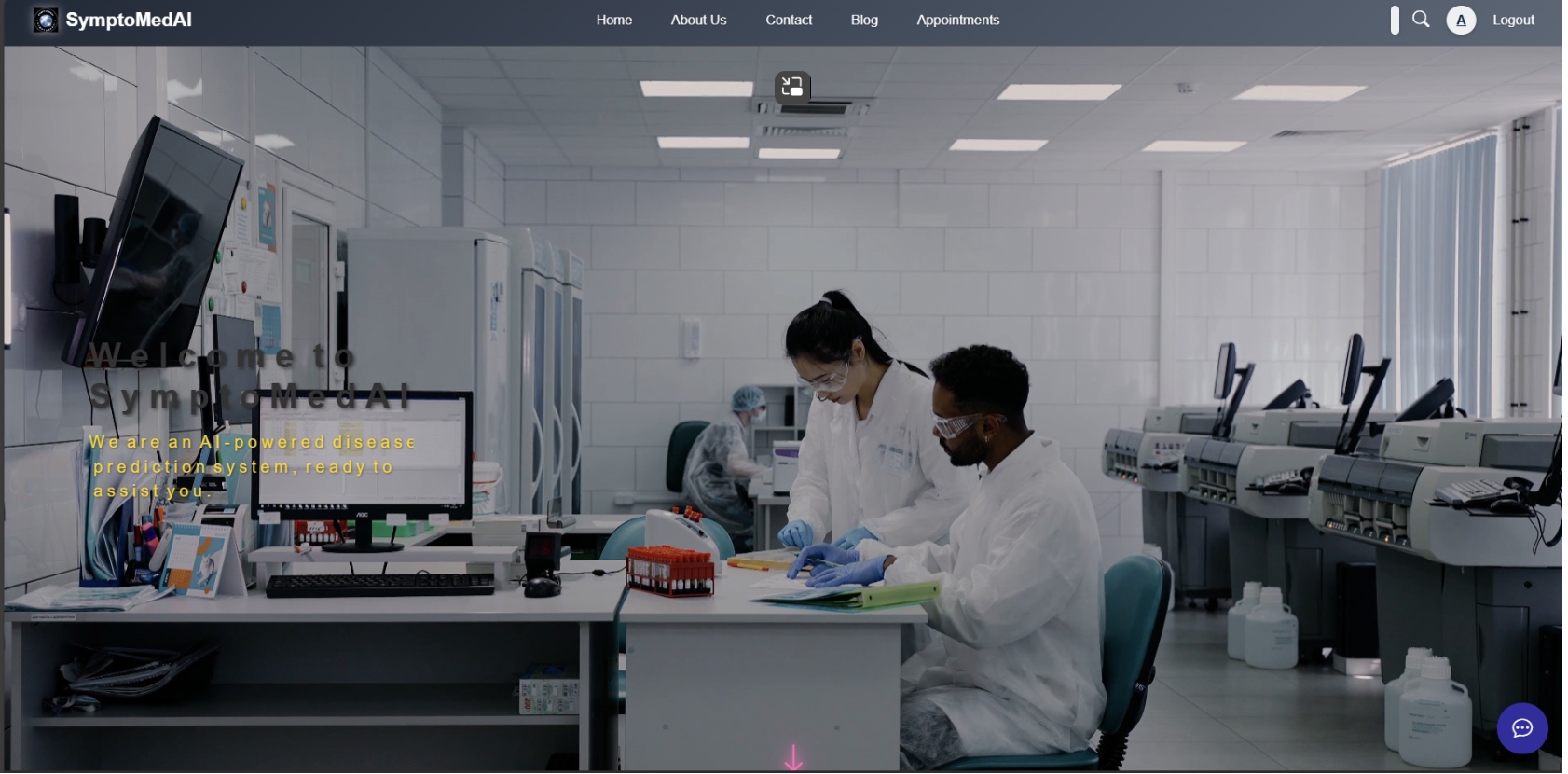
SymptoMedAI: Disease Prediction and Healthcare Assistant
April 19, 2025Machine learning diagnostics with appointment and consultation flow
A healthcare machine learning platform that predicts likely medical conditions from structured patient symptom inputs. Features automated appointment booking, targeted medicine suggestions, and doctor consultation workflows.
- Predictive Diagnostic Modeling: Trained and tuned a Random Forest Classifier on structured clinical symptom datasets, achieving high multi class diagnostic precision.
- High Performance Metrics: Built asynchronous REST endpoints using FastAPI and MySQL for sub 50ms inference times and transactional appointment scheduling.
- End to End Clinical Workflow: Automated symptom triage, medical specialist mapping, medicine precaution advisories, and diagnostic summary generation.
FarmVista: Smart Agriculture Advisory
Feb 28, 2024Smart India Hackathon (SIH) team lead project
Led a five member team in developing an agricultural advisory system that recommends optimal crop patterns and fertilizer cycles based on live weather data, regional soil composition, and market demand indices.
- SIH Hackathon Team Leadership: Directed a 5 member engineering team to design, build, and pitch an end to end precision agriculture recommendation platform.
- Soil Health & Crop Optimization: Built predictive machine learning models incorporating regional NPK soil nutrients, rainfall forecasts, and market commodity demand.
- Meteorological Integration: Connected external weather APIs to calculate optimal sowing calendars and provide automated alerts against adverse micro climate conditions.

Vaken Technologies
Junior Software Engineer
Full time- Scalable REST APIs & Transactional Integrity: Developed and enhanced scalable backend services and REST APIs using Java 21, Spring Boot, and PostgreSQL, enabling reliable client and platform data exchange. Designed reliable transactional workflows using Spring transactions and ACID principles across critical create, update, delete, and confirmation operations to maintain data consistency and prevent data loss under concurrent traffic.
- Dual Database Architecture (PostgreSQL & DynamoDB): Architected data persistence across PostgreSQL and Amazon DynamoDB based on access requirements, leveraging NoSQL for fast key value reads. Improved database performance for large datasets through database indexing, query optimization, and table design improvements, eliminating unnecessary columns and redundant retrieval to minimize database I/O and reduce unnecessary row scans.
- Redis Caching & Cache Stampede Prevention: Implemented in memory Redis caching with TTL expiration for frequently accessed data, drastically reducing repeated database queries and accelerating API response times. Applied cache stampede prevention with mutex locks to stop concurrent requests from overwhelming the database during traffic spikes.
- Cloud Storage, Presigned URLs & RBAC Authorization: Implemented secure file and document storage using Amazon S3 and expiring presigned URLs for secure retrieval and previews without exposing direct storage access. Enforced role based access control (RBAC) to restrict feature access based on user permissions, strengthening authorization across all platform capabilities.
- CI/CD Automation, Serverless & Cloud Infrastructure: Automated application build and deployment workflows using Jenkins CI/CD to standardize Java compilation, packaging, and containerized deployment with Docker and Amazon ECS. Deployed AWS Lambda for event driven and scheduled batch workloads to optimize compute utilization, and implemented structured application logging with AWS CloudWatch for rapid observability and troubleshooting.
- Agentic AI, MCP Tools & Cost Optimization: Contributed to Agentic AI development by building autonomous agents, defining reusable skills, integrating MCP tool access, and deploying RAG pipelines with safety guardrails to enable context aware task execution. Optimized LLM inference costs and response efficiency through dynamic model routing (routing simpler operations to lightweight models and reserving complex tasks for advanced LLMs), and built automation suites with Python and Playwright.
Intern
Internship- Completed intensive onboarding and platform training on Sovablu, an enterprise development platform, gaining practical understanding of its architecture, engine, and microservices workflow.
- Built proof of concept backend service modules in Java, assisted in REST API validation, and automated build checks with Jenkins CI/CD and Git.
Data Science Intern
SpreadTech Solutions · Spreading Tech Evaluation
- Home Price Prediction Model: Engineered multivariate regression pipelines using Python and Scikit Learn to predict residential property valuations based on square footage, locality, amenities, and historical sales trends. Implemented data normalization and cross validation (evaluating RMSE and R²).
- Weather Forecasting System: Developed predictive time series models leveraging historical meteorological data to analyze atmospheric trends and forecast local weather variables including precipitation likelihood, temperature fluctuations, and humidity.
- Spam Mail Detection Classifier: Implemented an end to end NLP email classification system using TF-IDF text vectorization and supervised classifiers (Naive Bayes & Random Forest) to accurately detect and filter spam and phishing emails with high precision and recall.

Knowledge Institute of Technology (KIOT)
B.Tech in Artificial Intelligence and Data Science
- Built comprehensive theoretical and practical depth across Data Structures and Algorithms (Java), Distributed Systems, Database Management Systems (PostgreSQL, MySQL), Machine Learning, and Software Engineering.
- Smart India Hackathon (SIH) Team Leader: Directed a 5 member engineering team through prototype design, machine learning model integration, and live pitch presentation for FarmVista.
Industry Certifications
Verified Technical Qualifications
Languages
Python
FarmVista · SpreadTech
Backend & Systems Architecture
Databases & Caching
Applied AI & Machine Learning
Cloud & DevOps
Algorithms & Academic Foundations
DSA (Trees, Graphs, DP)
LeetCode Guardian (2134)
Open LeetCode Profile
LeetCode Guardian Badge
Top 1.33% Worldwide
LeetCode Guardian with an official contest rating of 2,134, ranking in the top 1.33% worldwide. Peak performances include Global Rank #114 in Weekly Contest 517, alongside finishes at Rank #197 and Rank #393.
 Python3 Solved
Contest Rating Trajectory & Performance Curve
Official Weekly Contests (Dec 2025 to Sep 2026) · Guardian Tier Progression
Solved Problems by Language & Algorithmic Skills
Verified problem counts across programming languages and topic mastery directly from LeetCode:
Python3
443 solved
Python
5 solved
Core Algorithmic Domains Mastered
Extensive algorithmic problem solving depth in Java covering core computer science concepts:
Smart India Hackathon (SIH) | Team Leader
Led a 5 member engineering team to design and build FarmVista, an AI precision agriculture platform integrating deep learning computer vision for automated crop disease diagnosis, soil moisture telemetry, and advisory workflows. Coordinated system architecture, machine learning pipelines, REST API integrations, and pitch presentations.